Q: Is hair removal cream safer than waxing?
A: Hair removal cream can be safer for those with low pain tolerance when patch tested properly. It reduces pulling compared to waxing.
Q: Does waxing cause more ingrown hairs than shaving?
A: "Waxing can increase the risk of ingrown hairs if proper exfoliation and aftercare are not followed.
Q: Can I use hair removal cream on bikini line?
A: Yes, but choose a formula suitable for sensitive skin and always patch test first.
Q: Is hair removal cream safe for sensitive skin?
A: Hair removal creams designed for sensitive skin are generally safe when used according to instructions and after performing a patch test.
Q: Can hair removal cream cause irritation?
A: Yes, irritation may occur if the cream is left on the skin longer than recommended or if the skin reacts to certain ingredients.
Q: Is hair removal cream better than shaving for sensitive skin?
A: Hair removal creams may cause fewer razor bumps compared to shaving, making them a suitable option for some people with sensitive skin.
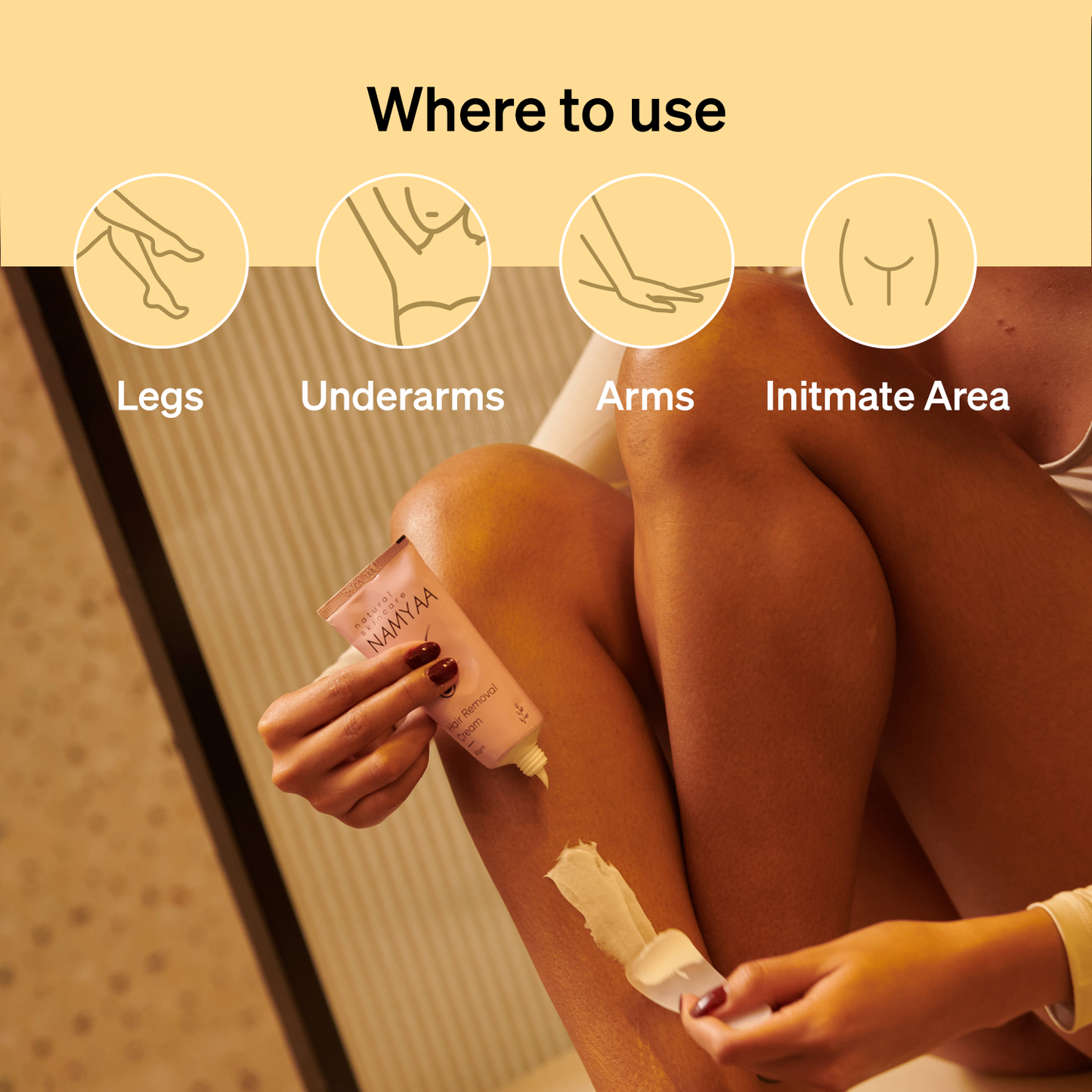
Q: Can hair removal cream be used on underarms?
A: Many sensitive skin formulas are suitable for underarms when used according to the product instructions.
Q: How often can hair removal cream be used?
A: Most people use hair removal cream every three to four weeks depending on hair growth and skin sensitivity.
Q: Does hair removal cream cause skin darkening?
A: Skin darkening is usually caused by irritation or friction rather than the hair removal cream itself.
Q: How do I prevent bumps after using hair removal cream?
A: Moisturizing the skin, avoiding tight clothing, and exfoliating gently after 24 hours can help prevent bumps and ingrown hair.
Q: How long does hair removal cream last?
A: Hair removal cream typically keeps skin smooth for three to seven days depending on hair growth rate and body area.
Q: Does hair grow back thicker after hair removal cream?
A: No. Hair removal cream does not change hair thickness. Regrowth may feel softer because the hair dissolves instead of being cut.
Q: Is hair removal cream longer lasting than shaving?
A: Hair removal creams usually last slightly longer than shaving because they dissolve hair just below the skin surface.
Q: Can hair removal cream be used on the bikini line?
A: Some formulas can be used on the bikini line if designed for sensitive skin, but a patch test should always be performed.
Q: How often can you use hair removal cream?
A: Most people use hair removal cream every three to four weeks depending on hair growth and skin sensitivity.
Q: How long does hair removal cream last?
A: Hair removal cream typically keeps skin smooth for three to seven days depending on hair growth rate and body area.
Q: Does hair grow back thicker after hair removal cream?
A: No. Hair removal cream does not change hair thickness. Regrowth may feel softer because the hair dissolves instead of being cut.
Q: Is hair removal cream longer lasting than shaving?
A: Hair removal creams usually last slightly longer than shaving because they dissolve hair just below the skin surface.
Q: Can hair removal cream be used on the bikini line?
A: Some formulas can be used on the bikini line if designed for sensitive skin, but a patch test should always be performed.
Q: How often can you use hair removal cream?
A: Most people use hair removal cream every three to four weeks depending on hair growth and skin sensitivity.
Q: Does hair removal cream remove hair permanently?
A: No, it removes hair only from the surface, so regrowth happens within days.
Q: Is hair removal cream permanent or temporary?
A: It is completely temporary and requires regular use.
Q: How long does hair removal cream last?
A: Typically 3–7 days depending on hair growth.
Q: Can hair removal cream stop hair growth?
A: No, it does not affect the hair follicle.
Q: Is it safe for sensitive skin?
A: Yes, if you use a suitable formula and patch test first.
Q: Can I use it on bikini line?
A: Yes, but only with products designed for sensitive areas.
Q: Does it cause ingrown hair?
A: It is less likely compared to shaving, but improper use can irritate skin.
Q: What happens if I leave it too long?
A: It can cause irritation, redness, or burns.